Reflection for North Balwyn Uniting Church
4th of October 2026
Isaiah 5:1-7
Matthew 21:33-46
‘I will sing for my beloved my love song concerning his vineyard: My beloved had a vineyard on a very fertile hill.’
The trouble with listening to a Bible reading is that we know we are listening to Scripture. No matter how the reading begins, and today’s passage from the prophecies of Isaiah begins as a love song, all of us will be expecting God to make an appearance, probably accompanied by the people of Israel and Judah. We do not respond to today’s reading as its first hearers did; the arrival of the Lord of Hosts in the last line of this poem does not surprise us.
Think of Isaiah’s first hearers. Maybe they are in Jerusalem’s marketplace, trying to sell their goods, including wine produced from their vineyards. Or maybe they are feasting together at the end of the harvest, after all the grapes have been picked. They hear a singer, Isaiah of Jerusalem, telling them that he is going to sing a love song about a vineyard. They might nudge their neighbour; there might be some laughter, because brides are often described metaphorically as vineyards, with their husbands carefully tending them and protecting them with walls and watchtowers. Nothing in the first lines of this song challenges this metaphor.
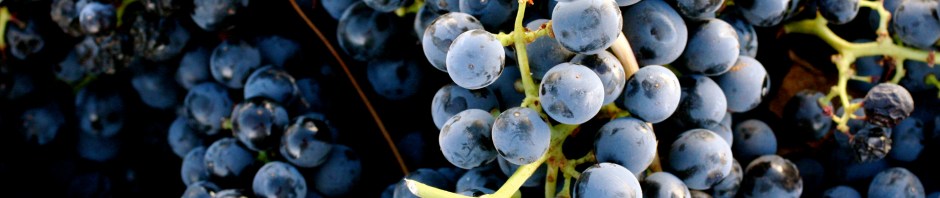
Suddenly, the tone of Isaiah’s song changes. The song is no longer about the wonders of a fertile vineyard and the care the beloved lavishes on it. Now the beloved speaks in the singer’s voice and demands that the ‘inhabitants of Jerusalem and people of Judah’ sit in judgement, as men often did in the marketplace. The fertile and carefully tended vineyard has brought forth rotten grapes rather than the grapes the viticulturist expected. An audience of other wine-farmers would understand from his description that the beloved has done everything necessary for cultivation, and yet the crop has failed. When called to give judgement, they would side with the beloved against his vineyard.
Receiving judgement in his favour, the viticulturist explains what he is going to do. All the careful husbandry he gave his vineyard will now be reversed. It will become a wasteland, with its hedge devoured and its wall trampled down. No longer pruned or hoed, it will be overgrown with briers and thorns. More than that, the beloved says, ‘I will also command the clouds that they rain no rain upon it.’ Suddenly we have gone beyond a merely human call for judgement. The only one who can determine whether or not it rains is the Lord. Maybe the ‘inhabitants of Jerusalem and people of Judah’ are not the people sitting in the judgement seat.
Isaiah of Jerusalem comes to his conclusion, having turned what seemed to be a love song into a juridical parable. As with the story that the Prophet Nathan told King David (2 Samuel 12), those who thought they were sitting in judgement on another discover that they have been judging themselves. They, the house of Israel, are the vineyard; they, the people of Judah, are the cherished garden; they have brought forth the rotten grapes of bloodshed and crying, and the Lord of Hosts is going to destroy them. If this song does date back to the First Prophet Isaiah, Isaiah of Jerusalem, and the eighth century BCE, this would be a dreadful shock. The people of the southern kingdom of Judah thought that they were doing everything right. Unlike the northern kingdom of Israel, now destroyed by the Assyrians, they were still loyal to the Davidic monarchy; they worshipped at the Temple in Jerusalem. But the Prophet tells them that the Lord of Hosts cares less about their loyalty than about the justice and righteousness they are failing to demonstrate. God does not care about the way they worship. God wants them to: ‘cease to do evil; learn to do good; seek justice; rescue the oppressed; defend the orphan; plead for the widow.’ (Isaiah 1:16-17) These are the grapes God wants, not the rotten grapes of ‘solemn assemblies with iniquity.’ (Isaiah 1:13)
The description of the vineyard in the Prophet’s song hints at the injustice he was condemning. The owner of the vineyard must be rich, because only the wealthy could build watchtowers. Grapes were a cash crop; wine was a lucrative trading item. Immediately after today’s song, the Prophet warns, ‘Woe to those who join house to house, who add field to field, until there is room for no one, and you are left to live alone in the midst of the land!’ (Isaiah 5:8) This is what was happening in Judah as the community moved from subsistence farming to cash cropping. The landowners added field to field, making wine to sell in Egypt and Mesopotamia, while the peasants worked in those fields for wages that would enable them to buy the food they could no longer grow for themselves.
The problem I always have with the Hebrew Prophets is that the God they describe is indiscriminate in punishing the people. The Song of the Vineyard is directed at wealthy landowners, but when Babylon conquers Judah, everyone suffers, not just the wealthy. If the vineyard that is going to be destroyed is the whole house of Israel and the entire people of Judah, rich and poor alike will suffer when the Lord of Hosts turns it into a wasteland. It may be my twenty-first-century perspective, but I do not believe that an entire nation should suffer for the crimes of its leaders or the accumulation of the rich.
In today’s parable from the Gospel according to Matthew, it seems that Jesus agrees with me. We know, because of their shared vocabulary, that Jesus’ parable draws on Isaiah’s song, but Jesus adds further characters to it. The wrongdoing in the parable comes not from the vineyard, which has produced the expected harvest. Instead, the wrongdoing comes from the tenants working in the vineyard; it is those who tend the vineyard who will be put to a miserable death, while the vineyard itself, the house of Israel and the people of Judah, will flourish under its new managers.
Jesus, like Isaiah, is telling a juridical parable in which those who make the judgement realise that they are the ones being judged. The slaves who are beaten, stoned and killed are the various prophets. The landowner’s son, thrown out of the vineyard and killed, is, of course, Jesus himself, crucified outside the city. After his death, the vineyard, the kingdom of God, the house of Israel, will be taken from the priests and Pharisees and given to ‘a people that produces the fruits of the kingdom.’ But the vineyard will continue to flourish. Unlike Isaiah’s song of the vineyard, in Jesus’ parable only the leaders will be punished, not those who have been led.
We need to remember the context in which Matthew was writing his gospel. The Temple, which had been the central unifying institution for the people of Israel, had recently been destroyed by the Romans. The priests no longer had a role, but the Pharisees had united the people of Israel around the Torah, the Law, eventually creating rabbinic Judaism. At the same time, Jesus’ followers had united Jews and Gentiles around the person of Jesus, eventually creating Christianity. What are now two separate religions were then competitors within the one faith, each group claiming to be the authentic heir of Second Temple Judaism. In today’s parable, the vineyard remains the same; it is only the tenants, the leaders of Israel, that change. This is not a parable that says that the church has replaced the people of Israel.
It is a parable that limits miserable deaths to the leaders of the people, rather than killing off the general population. It might seem unnecessary for me to emphasise that; we are a society meant to be far beyond the collective punishments of the ancient world. But today we see even some leaders of democratic nations comfortable with breaking international law; we have watched the slaughter of innocent civilians in conflict become commonplace. Today’s reading reminds us that, while the Hebrew Prophets might have taken for granted the punishment of entire nations for the crimes of their leaders, when Jesus drew on their prophecies, he retold them.
This does not entirely let us off the hook. We have much more say over the actions of our leaders than any Israelite, whether of the eighth century BCE or the first century CE. We have the right to vote our leaders in and out. Because we have this responsibility and privilege, it is not enough for us to individually produce the fruits of justice and righteousness. We also need to vote for leaders who we believe will produce those fruits too, or, at the very least, leaders who will not produce the rotten grapes of injustice and violence. As we vote in forthcoming elections, let us do our best to make choices that will enable the Australian vineyard of the Lord to grow good grapes.


