Reflection for North Balwyn Uniting Church
Easter 7, 17th of May 2026
1 Peter 4:12-14 and 5:6-11
‘Beloved, do not be surprised at the fiery ordeal that is taking place among you to test you, as though something strange were happening to you. But rejoice insofar as you are sharing Christ’s sufferings, so that you may also be glad and shout for joy when his glory is revealed.’
As I said a fortnight ago, this First Letter of Peter was probably written around the end of the first century to small, vulnerable communities of Jesus-followers in what is now Türkiye who were being persecuted by those around them. To the Roman Empire, people following the Way of Jesus were traitors. Jews who chose to follow the Way of Jesus were often rejected by their families, communities, and synagogues. The first recipients of this letter included women and slaves under attack for choosing not to follow the religions of their masters and husbands and neighbours. They were being persecuted in a way that Christians in Australia will never experience. Yet it was these persecuted people that the author of the Letter described as ‘a chosen people, a royal priesthood, a holy nation, God’s own people’.
Read more: Sermon: Why persecution does not work on ChristiansMuch of this letter advises Christians how to live as a persecuted minority. They are to ‘rid themselves … of all malice and all guile, insincerity, envy and all slander’. (1 Peter 2:1) They are to conduct themselves honourably among the Gentiles. (1 Peter 2:12) They are to keep their consciences clear. (1 Peter 3:16) ‘Above all,’ the author writes, ‘maintain constant love for one another, for love covers a multitude of sins.’ (1 Peter 4:8) If they do all this, there is always the hope that those who abuse them might be won over by their honourable deeds: ‘Now who will harm you if you are eager to do what is good?’ (1 Peter 3:13)
But the author of the Letter is aware that even if the recipients do live honourable lives, they may still be attacked. And so, we come to the beginning of today’s reading: ‘Beloved, do not be surprised at the fiery ordeal that is taking place among you to test you, as though something strange were happening to you.’ As slaves were reminded in the reading from two weeks ago, Jesus himself suffered persecution and death, although ‘[w]hen he was abused, he did not return abuse; when he suffered, he did not threaten, but he entrusted himself to the one who judges justly’. (1 Peter 2:22) We should not be surprised, the author of the letter tells us, when the world that murdered Jesus on the cross forces Jesus’ followers to also face times of trial; it is not strange that Jesus’ followers are tested as he was
Because Jesus first suffered for us, no suffering we experience for righteousness’ sake is meaningless. Followers of Jesus are not to go looking for suffering, but we are reassured that should we suffer unjustly, it is not because we are being punished or rejected by God; instead, we are sharing in Christ’s own sufferings. The Greek word used here for sharing is koinonia, from which comes our word ‘communion’. In the same way that we are joined to Christ around the communion table, so we are joined to Christ when we suffer. We can even rejoice through our sufferings, because we know that just as Christ suffered and was raised to glory, then ‘[i]f you are reviled for the name of Christ, you are blessed, because the spirit of glory, which is the Spirit of God, is resting on you’. The author is echoing the last Beatitude from the Sermon on the Mount: ‘Blessed are you when people revile you and persecute you and utter all kinds of evil against you falsely on my account. Rejoice and be glad, for your reward is great in heaven, for in the same way they persecuted the prophets who were before you.’ (Matthew 5:11-12)
This passage is not immediately relevant to us, Christians living in twenty-first-century Australia. We do not face any fiery ordeals for being Christian; as I have said before, the very worst that Christians in Australia face is mockery or indifference. But, as today’s reading also reminds us, we are part of the one universal church, and one of the reasons for us to be steadfast in our faith is because of our brothers and sisters throughout the world who are undergoing suffering and remaining faithful. The koinonia we share with Christ when we suffer, we also share with the worldwide company of Christians. We are affected whenever faithful Christians anywhere in the world are experiencing a time of trial, or at least we should be, because we are all part of one body, united as the Father and Son are united. And the faithfulness of all the other Christians who have suffered throughout time and space strengthens us when we are reviled for the name of Christ, just as our prayers and support strengthen them.
When talking about the suffering that Christians might face, the author of this letter makes it clear that the suffering in which they are to rejoice, the suffering that shares Christ’s suffering, is unmerited. Today’s reading from the letter jumps several verses, including one that says: ‘But let none of you suffer as a murderer, a thief, a criminal, or even as a mischief-maker.’ (1 Peter 4:15) Christians are blessed if we are reviled for the name of Christ, but not if we are rightly reviled for sins and crimes. This Sunday is the beginning of the Week of Prayer for Christian Unity in the southern hemisphere, and later in the service we will pray in words prepared for this week by the Armenian Apostolic Orthodox Church. In today’s reading from the Gospel, Christ prays that all those who follow him ‘may be one, as we are one,’ and disunity among Jesus’ followers is a sin, and has sometimes been a crime.
For the past 500 years, the church in the West has been divided between Catholics and Protestants. But for about a thousand years there was just as great a division between the Western and Eastern Churches, between the Orthodox, including the Armenian Apostolic Orthodox Church, and the rest of us. In 1054, Pope Leo the Ninth excommunicated the Ecumenical Patriarch in Constantinople over the question of whether the bread used in the Eucharist should be unleavened. Pope Leo sent his friend, Cardinal Humbert, to Constantinople, and the Cardinal strode into the Hagia Sophia and slapped the declaration of excommunication on the altar. In response, the Ecumenical Patriarch Michael Keroularios excommunicated the Pope. The Pope and the Ecumenical Patriarch did not revoke these mutual anathemas until the 7th of December 1965, 911 years later. Other divisions were over whether the Holy Spirit proceeds from the Father and the Son, or only from the Father; and whether the Pope has a special leadership role or is only the elder brother of the church’s other bishops. But what caused the greatest division between the Western and Eastern churches was the 1204 sack of Constantinople.
In 1202, plans were drawn up for a Fourth Crusade to ‘liberate’ the Holy Land from Islam. A consortium of crusaders struck a deal with Venice to build ships and transport them to attack Cairo as a first step to conquering Jerusalem. But not enough people turned up to fill the ships, and the Venetians did not want to lose all the money they had spent on the fleet. They convinced the crusaders who had turned up to attack not Islamic Cairo but Orthodox Christian Constantinople. The Western Christians looted the city and installed a Venetian as Patriarch of Constantinople.
The Ottoman Turks captured Constantinople in 1453; we now know it as Istanbul, but the Orthodox Ecumenical Patriarch is still based there, and the Orthodox world still remembers the Fourth Crusade. Churches can appropriately worship separately because of our different liturgies and languages and attitudes to leadership, but the thousand years of division between East and West that saw each excommunicating the other was a grave sin, and the Fourth Crusade was a crime. As Australia suffers from a cost-of-living crisis caused by the conflict between the religious fundamentalists of Iran and Israel, we need to remember that Christianity has at times been just as violent and with even less excuse, because Christians claim to follow the Prince of Peace.
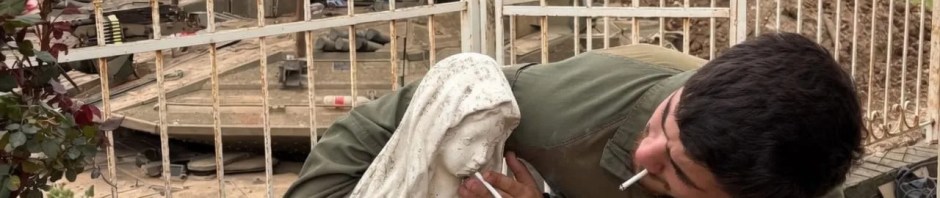
This First Letter of Peter ends with a doxology giving thanks to God: ‘And after you have suffered for a little while, the God of all grace, who has called you to his eternal glory in Christ, will himself restore, support, strengthen, and establish you. To him be the power forever and ever. Amen.’ We live in a world in which evil exists, even if the image of the devil prowling around like a roaring lion no longer speaks to us. We live in a world in which some try to attack Christianity by desecrating churches and killing Christians. Those who do so may not know why their attacks are doomed to fail, but it is because when Christians are under attack, we are most restored, supported, strengthened, and established by Christ, who himself suffered. The destruction of churches, monasteries and convents and the martyrdom of Christians only strengthen the faith of those in communion with Christ, as numerous tyrants throughout history have found. Given the faithfulness of those facing ‘the fiery ordeal,’ we who face so little opposition to our faith should be even more able to cast all our anxiety on Jesus, knowing how he cares for all of us.
In the words of this letter, let us discipline ourselves and keep alert, remembering that for each of us the day will come when we will be glad and shout for joy because we will see God’s glory fully revealed. Amen.


