Reflection for North Balwyn Uniting Church
Fifteenth Anniversary, 31 May 2026
Fifteen years and three days ago, on the twenty-eighth of May 2011, the Presbytery of Yarra Yarra resolved to amalgamate the congregations of St Aidan’s Uniting Church, Balwyn North, and Trinity Uniting Church, Balwyn North, with the amalgamated congregation to be known as North Balwyn Uniting Church. St Aidan’s and Trinity had been worshipping together for months before that date. A Farewell Service was held at Trinity Uniting Church on the sixth of February 2011. The next Sunday, the thirteenth of February, the Order of Service describes the congregation that worshipped here as ‘North Balwyn Uniting Church: St Aidan’s and Trinity.’ That continued until the third Sunday in Lent, on the third of April, when the references to St Aidan’s and Trinity were removed, and the congregation was described as the Balwyn North Uniting Church. Then, finally, on Passion Sunday, on the seventeenth of April 2011, we have the first mention of ‘North Balwyn Uniting Church’ without any mention of the previous congregations. As so often in the church’s life, a decision was put into practice before the Presbytery officially approved it.
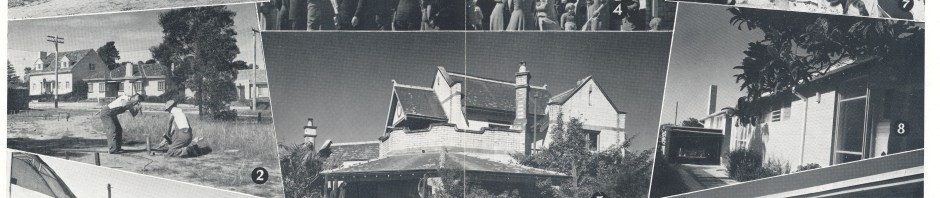
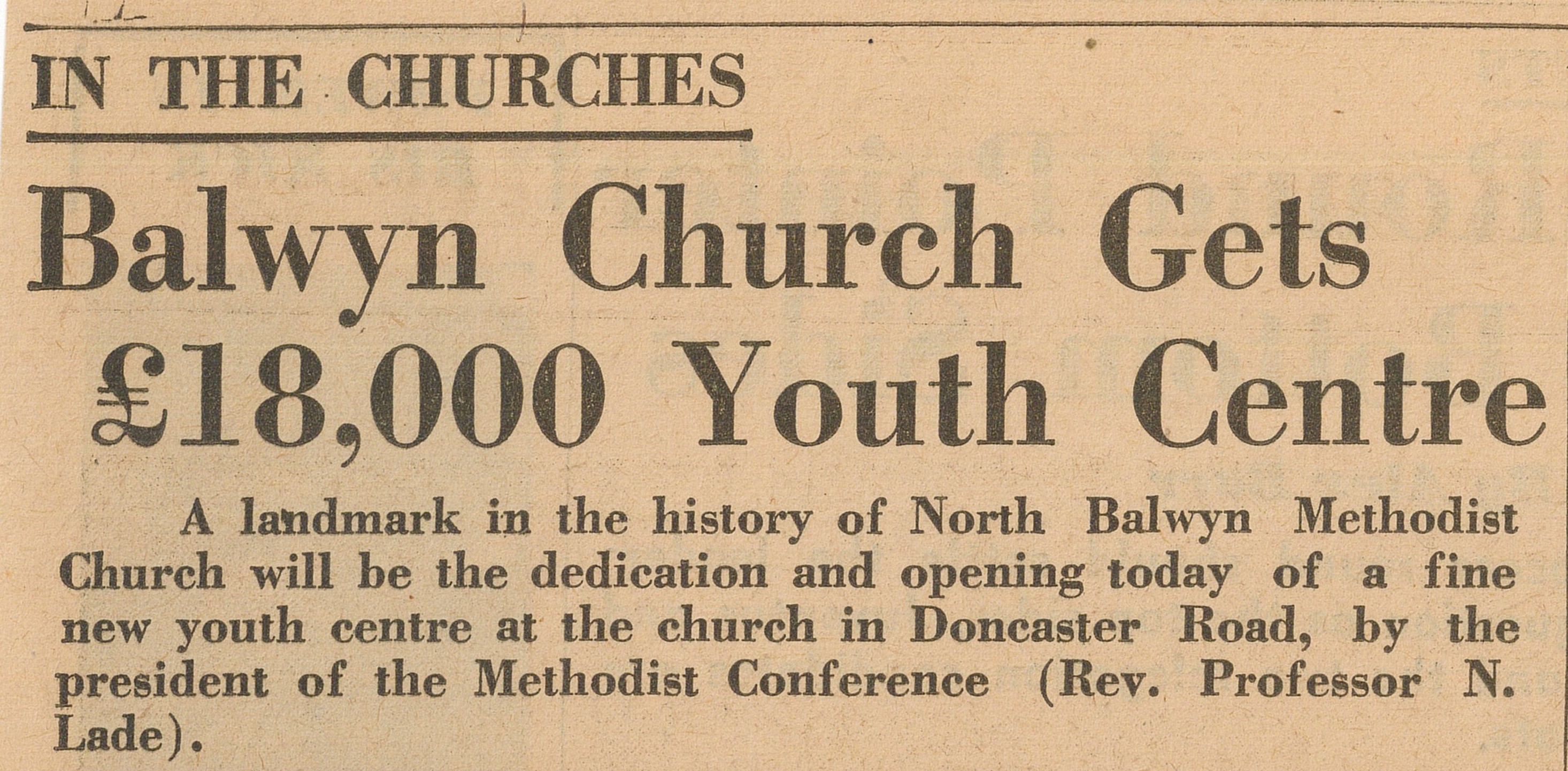
Because of the pattern of development in Melbourne, the two churches that amalgamated were young ones. In 1939, the Canterbury Methodist Circuit purchased land in Doncaster Road for a Methodist church. The foundation stone of the first building, the Church Hall, was laid on 30th August 1941. The first services were held on 30th November 1941; the first Sunday School was held on 6th December 1941. The kindergarten opened on 18th March 1951, and the Youth Centre was opened on 23rd June 1956, receiving a write-up in The Age because of its cost.
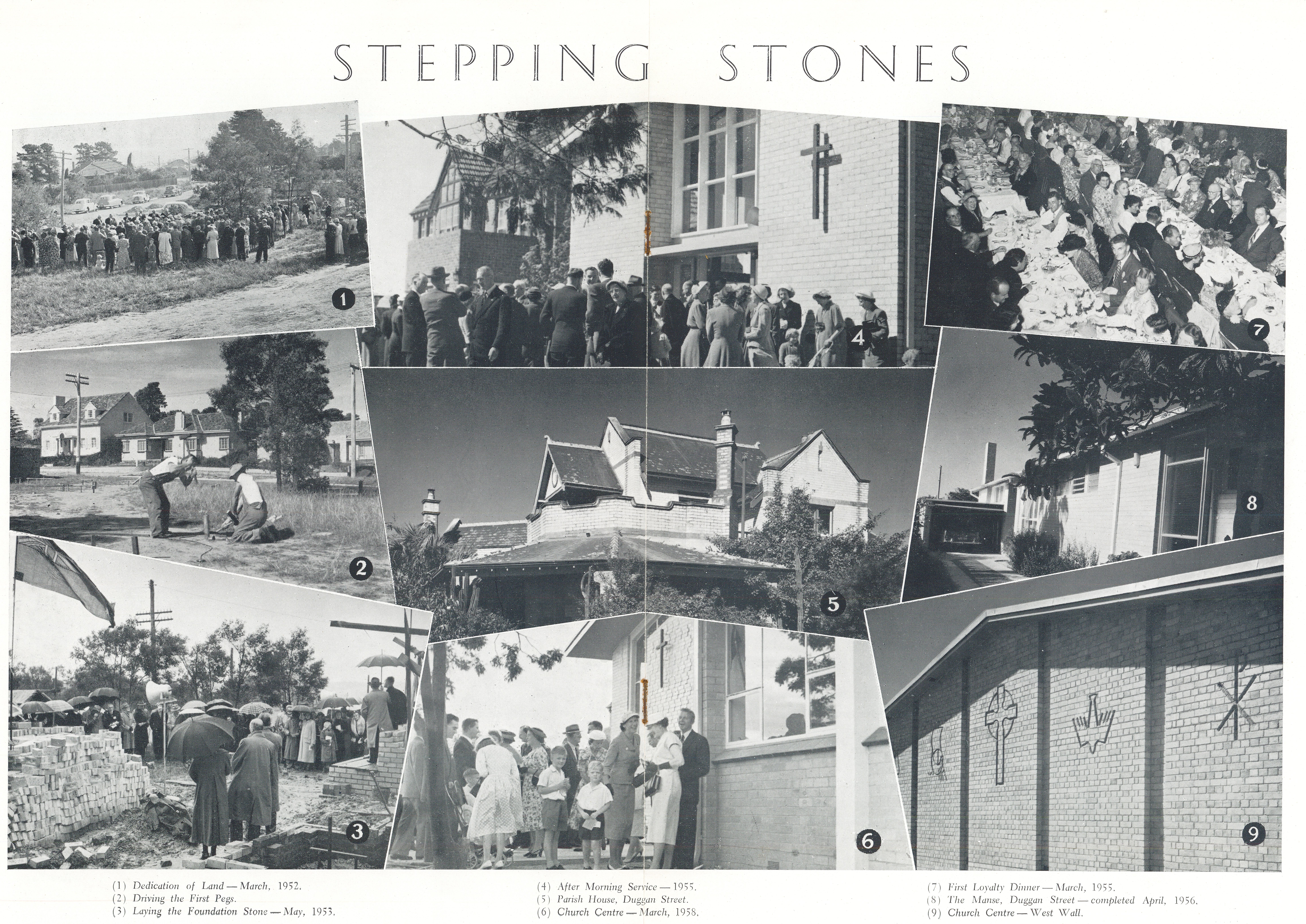
On Palm Sunday 1951, a small group from the Presbyterian churches of East Kew and Deepdene dedicated a triangular block of land to the task of building a Presbyterian congregation in North Balwyn. Initially, services were held in St. Silas’ Church of England, and Sunday School and Bible classes were held in private homes. In October 1953, an all-purpose hall was dedicated and was used for worship as well as for Scouts and Guides meetings, Sunday School and kindergarten. New extensions to this Church Centre were opened in March 1958.
In the early sixties, both churches started massive fundraising and building programs. Their churches were overflowing, and they needed space for people to worship. The stewardship programs are incredibly impressive. From A Vision Splendid by the North Balwyn Methodist Church, 1955.
Second only [to the provision of the Youth Centre] is the provision of a permanent Church building adequate for the congregations whose numbers, happily, are continually increasing. This is a matter for the immediate future, not one which is, in any sense, to be regarded as part of a long-range programme and, as such, to be deferred at will. Services at present are full of warmth and vitality emanating from the fellowship of worshippers, not the building. But we must go forward planning and building in the same spirit of adventurous faith which actuated the founders of North Balwyn Methodism. The man outside the Church judges our faith, and his need, by our works.
In 1963, Rev. Laurence O. C. White wrote:
We of St. Aidan’s are greatly privileged. Thanks to the generous help of the original owner of the property, the late Mr. Ferdinand Finger, our Parish Church will stand on the finest site in the district. I call upon you, the members and adherents of St. Aidan’s, to join by your sacrificial giving in making this House of God a reality … For ten years our congregation has had to ‘make do’ with an “all purpose” hall, excellent in every way as a Church Centre, but I am sure that we have all felt the great need for a House of Prayer dedicated to this one sacred purpose.
In 1964, he wrote:
As your Minister I am humbly grateful for the evidence of God’s blessing on our work together over the last nine years since I came amongst you. There has been solid growth in every facet of the life and work of St. Aidan’s. Now, with around 540 communicant members and a large number of adherents we are one of the larger congregations of Melbourne, but no congregation of this size can carry on its work satisfactorily without a proper Church building. Such a House of Worship has already been begun as you will know, and we look forward keenly to its completion and its enhancement of our Sunday worship and of the other services for which a Church building is erected.
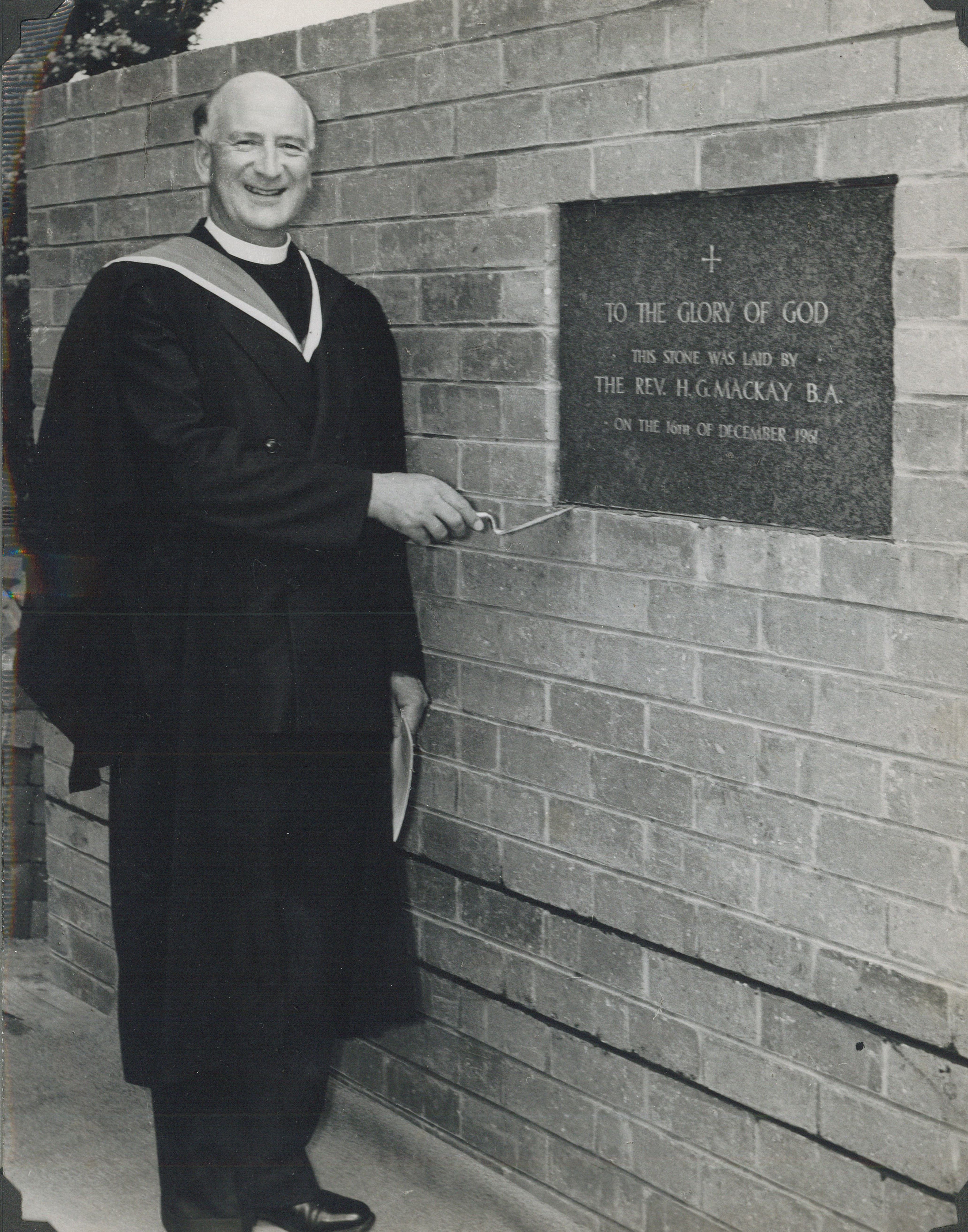
The Foundation Stone at North Balwyn Methodist Church, which became Trinity Uniting Church, was laid on the 16th of December 1961. The spire was put on the church on the 28th of July 1962, and the new church building was opened on the third of November 1962. Here, the bell, which was given to St. Aidan’s by the West Parish Church of Millport in the Isle of Greater Cumbrae off the Ayrshire coast of Scotland, arrived on the 5th of June 1964. The St Aidan’s Foundation Stone was laid on the 27th of September 1964. The new church building was opened on the 11th of December 1965.
How in fewer than fifty years did the church go from opening two large buildings to this description in Anneke’s sermon on the 13th of February 2011:
… never in the history of our two Churches has the work looked quite as grim as it does today. One Church closed and another looking at an age profile and a cultural context that gives every reason for concern. Church is out for most people of my age group and younger. They all loved going to Sunday school in the seventies and eighties, and most of them will tell you they can see the benefit of Church, as a moral agency, as a place for reflection, as a community where good values are taught and supported. They like the stories, even the good old hymns and the old version of the Lord’s prayer. They will come for weddings and seek our help with funerals, they bring their children for baptism, but they just don’t get around to actually being involved in the place and taking responsibility. Because they are too busy, too caught up in other things, and for some of them: they have seen too much of the time and energy-consuming downside of Church eating away at the life of their parents. Did we do something wrong as a Church? Did we fail? As a community? As parents? As God’s people? And are we now going to perish?
Anneke preached that fifteen years ago. All that changed in those fifteen years is that most of the children of those who went to Sunday School in the seventies and eighties no longer even come to us for weddings and funerals. Did we do something wrong as a Church? Have we failed?
Did you know that the fastest-growing religion between the censuses of 2016 and 2021 was Yezidi? Their numbers in Australia increased by 6,444%. This was not, of course, because the Yezidi have a fabulous evangelism program. It is because in Australia, religions grow by immigration, and a Humanitarian Program that resettled Yezidi women, children and families from Iraq and Syria increased the number of Yezidis in Australia from 63 people in 2016 to 4,123 in 2021. In the same way, Hinduism, Islam, and Sikhism are currently growing in Australia, not because those faiths are converting large numbers of atheist Australians, but because of migration from Southern and Central Asia. Religion in Australia has always grown by migration, so much so that in 1959 Rev. Dr Harold Wood, first Principal of MLC, worried that Methodists were not doing enough to encourage immigrants from the UK at a time when the Orthodox and Roman Catholic churches were increasing through post-war migration.
The one time when churches in Australia grew from factors other than migration was during the post-World War Two baby boom. The Trinity and St Aidan’s buildings were created to house that population, assuming that the boom would continue. But what has happened has been that religion in Australia has returned to its usual patterns: the first generation of migrants feel a strong loyalty to their faith; the second generation has a loose affiliation; the third generation, the grandchildren of migrants, are as irreligious as most other Australians. The difference between the ‘solid growth in every facet of the life and work of St. Aidan’s’ that Rev. Laurence O. C. White saw as ‘the evidence of God’s blessing’ and our situation today has very little to do with us and, I would suggest, little to do with God. It is all about the tides of history.
It must have been lovely to have worshipped in full churches with hundreds of members. But as a church, we must not keep looking back to the post-World War Two boom as though it was normal. The Scriptures that we read each Sunday were not written for massive congregations in beautiful buildings. They were written for small groups of Christians who gathered in house churches. We celebrate Pentecost as the birth day of the church and remember that after Peter’s preaching, ‘those who welcomed his message were baptised, and that day about three thousand persons were added.’ (Acts 2:41) But those three thousand were out of a Jerusalem population of between 30,000 and 100,000; they only made up between three and ten per cent of the population. (According to the last census, about forty-four per cent of the Australian population claims to be Christian, so maybe even numerically we are still not doing too badly.) The story of Pentecost ends, ‘And day by day the Lord added to their number those who were being saved’ (Acts 2:47), and, of course, we rejoice whenever anyone joins the church. But we must not imagine that God’s blessing is seen in huge numbers. The people who saw ‘solid growth in every facet of the life and work of St. Aidan’s’ in the 1960s were not more faithful than those of us who worship here in much smaller numbers today.
As I say so often, Jesus calls us to be salt, and a small amount of salt can change the flavour of an entire dish; Jesus calls us to be light, and one lamp on a lampstand can give light to an entire house. Even quite small denominations and congregations can be light and salt to the world if we truly seek to follow Jesus and live out love. Today, let us celebrate the past of this congregation and the faithfulness of all the generations that have gone before us, without worrying because we live in different times. God is still with us and will always be with us. Amen.


