Reflection for North Balwyn Uniting Church
3rd of November 2024
I recently had the fun of having my genetic heritage mapped. I did not ask the company to tell me which disease will eventually kill me, or to put me in touch with any unknown relatives. I just wanted to see whether the stories I have been told about my ancestry match my genes. The company compared my DNA to their reference panel of DNA from groups of people known to live in different regions of the world. As a method it is not foolproof, but the results that came back did match what I know of my heritage. Genetically I am mostly Scottish, then English, Ashkenazi Jewish, and Irish. I am, as I suspect most people are and as I already knew, a mongrel.
The test confirmed another thing that I already knew – there have been interfaith marriages in my family. Ancestors who were Jewish married ancestors who were not. According to some of the authors of the Hebrew Scriptures, by doing this they would have angered the Lord. And those ancestors could not have married in Israel today, because in twenty-first century Israel interfaith marriages are as illegal as same-sex ones. Commentators believe that it was as a challenge to the equivalent restrictions millennia ago that the Book of Ruth was written.
In the entire three-year lectionary we have only two readings from the Book of Ruth, which is a very, very great pity. It is a short book of four chapters, so I do encourage you all to go home and read the entire thing. Next week, when we are given the second of the lectionary readings from the Book of Ruth I will talk to you about what can be described as the ‘interesting’ behaviour of Naomi and Ruth, and why they are an example of the saying that well-behaved women seldom make history. Today I want to remind you of just how extraordinary it is that in the Hebrew Scriptures we have a book named after a Moabite woman.
Today’s reading is the beginning of the book and is full of ironic language. We are told that there is a famine in Bethlehem, the city whose name means ‘house of bread’ or ‘house of food’. Because there is no food in this town named for it, a certain man of Bethlehem goes to live in the country of Moab with his wife and two sons. They are economic migrants, crossing an international border in search of the goods they cannot find in their own country. The name of the man, Elimelech, means ‘my God is king,’ ironic because Elimelech has left the land where his God is king and is now in a land governed by another god. His wife’s name means ‘winsome’ or ‘pleasant,’ a name so unsuitable for her life that when she later returns to Bethlehem she asks its people to call her ‘Mara,’ meaning bitter, because ‘the Almighty has dealt bitterly with me’. (Ruth 1:20-21) Their sons are called Mahlon and Chilion, which have been interpreted as ‘sickness’ and ‘wasting’ or ‘weakening’ and ‘pining’. So it is no surprise that we are soon told that Elimelech, Mahlon and Chilion have all died in Moab. Jewish Midrash, the ancient commentary on the Hebrew Scriptures, explains that this is because Mahlon and Chilion have married Moabite women.
Why is it so dreadful that Mahlon and Chilion have married foreigners? Why in particular does marrying Moabites deserve death? In Genesis we are told that after Lot and his daughters (but not his wife, who had become a pillar of salt) escaped God’s destruction of the cities of the plain, his daughters were afraid that there were no men left on the earth. To have children, they got their father drunk and each slept with him. ‘Thus,’ says the author of this part of Genesis, ‘both the daughters of Lot became pregnant by their father. The firstborn bore a son, and named him Moab; he is the ancestor of the Moabites to this day. The younger also bore a son and named him Ben-ammi; he is the ancestor of the Ammonites to this day.’ (Genesis 19:36-38) Later, while the people of Israel were on the journey between Egypt and the Promised Land, some had sexual relations with the women of Moab, who ‘invited the people to the sacrifices of their gods, and the people ate and bowed down to their gods’. This angered the Lord so much that he told Moses: ‘Take all the chiefs of the people, and impale them in the sun before the Lord, in order that the fierce anger of the Lord may turn away from Israel.’ (Numbers 25:1-4) In Deuteronomy the people of Israel are instructed that: ‘No Ammonite or Moabite shall be admitted to the assembly of the Lord. Even to the tenth generation, none of their descendants shall be admitted to the assembly of the Lord’. (Deuteronomy 23:3). No wonder Mahlon and Chilion’s marriages to the Moabites Orpah and Ruth have ended in death.
Deprived of husband and sons, Naomi decides to return from Moab to Bethlehem, hearing that there is again bread in the house of bread. She bids farewell to her daughters-in-law, acknowledging that despite being Moabites they have shown her family hesed, loving-kindness, an attribute of God: ‘May the Lord deal kindly with you, as you have dealt with the dead and with me’. Orpah eventually does as Naomi advises and leaves her to return to her mother’s house, after Naomi reminds her that even were Naomi to marry again and bear sons again, for which Naomi is too old, waiting for those hypothetical sons to reach marriageable age is not a viable life choice. Jewish Midrash says that she became the ancestor of Goliath, which I think is unfair. She is taking the only reasonable path. Ruth, on the other hand, takes a path that is profoundly unreasonable.
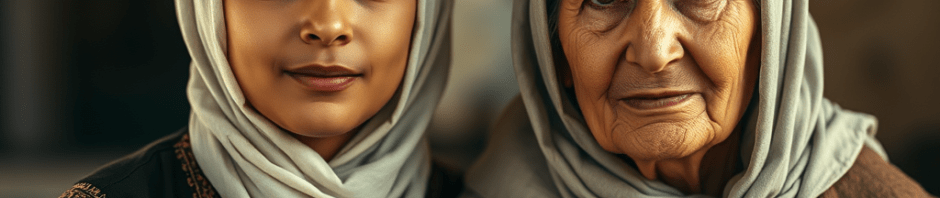
After being told a second time to leave Naomi, Ruth replies in words so beautiful that they are often used at weddings: ‘Do not press me to leave you or to turn back from following you! Where you go, I will go; where you lodge, I will lodge; your people shall be my people, and your God my God. Where you die, I will die — there will I be buried. May the Lord do thus and so to me, and more as well, if even death parts me from you!’ This member of a people born out of incest, a people known to have enticed the Israelites from their worship of the Lord in the past, is demonstrating her commitment to the God of Israel. Ruth not only says that Naomi’s God will be her God, she makes her vow in the name of that God.
Throughout the Hebrew Scriptures we see the people of Israel arguing with themselves. Are foreigners to be exterminated, or treated with kindness? Is wealth a sign of God’s favour, or a reason for God’s punishment? Can the people of Israel marry foreigners, or must foreign wives be repudiated and those descended from them be excluded? The Book of Ruth makes an intervention on one side of the argument, challenging religious, ethnic and cultural prejudice.
The Book of Ruth is also a challenge to the way authors of the Bible usually portray women. We are told that as Ruth makes her extraordinary vow she ‘clung’ to Naomi, the clinging that Genesis says a man is to do when he takes a wife. (Genesis 2:24) In a Bible that seldom includes the voices of women, and usually sees them only in relation to the men in their lives, Ruth directs her loyalty to her mother-in-law. As poet June Jordan writes of Ruth’s passionate promise of commitment:
From earliest childhood, I remember one or another version of these passionate words. As far as I knew, they were the only memorable, and even startling, thoughts attributed to any woman in the Bible. And, as a little girl, I appropriated the fierce loyalty, and the all-out loving commitment embodied by this passage, as an ideal towards which I could and should eagerly aspire … finally, somewhere, in that big Holy Book, there were words uttered by somebody female to another somebody female. And, what was most important was that her words matched up to the heroic qualities of the other biblical figures I came to memorize and assimilate inside the pantheon of my young heart.[1]
In a book in which the story’s action centres on losing and gaining husbands, it is the relationship between these two women that holds the meaning of the story. There is no equivalently ardent declaration between Ruth and Boaz to compare with the one made by Ruth to Naomi; the word ‘love’ is only used of Ruth’s feelings for Naomi. As we will hear next week, at the end of the story, when a male genealogy leading from Perez to David is given, amid all that masculinity, the women of Bethlehem tell Naomi that Ruth ‘is more to you than seven sons’. The biblical story of David and Jonathan is a justly celebrated example of friendship – it is tempting to think that David inherited his capacity for inspirational friendship from his Moabite great-grandmother.
We live in a time that is just as full of religious, ethnic, and cultural prejudice as were the centuries in which the books of the Bible were written. All too often religion is used as an excuse for conflict, or as a reason that the rights of others can be ignored. All too often members of one religion tell lies about other faiths. It is the theme of the nightly news. The Hebrew Scriptures approvingly give us stories of those who contend with and curse and beat and pull out the hair of men of Israel who have married foreign women. (Nehemiah 13:23-27) But the Hebrew Scriptures also give us the Book of Ruth. Both options, rejection and embrace, hatred and love, are equally biblical; it is up to us to choose between them. We know which school of Jewish teaching Jesus drew on. Jesus, descended from the Moabite Ruth, taught us that ‘foreigners’ are included in the neighbours we are to love as ourselves. In a world that tells us to be afraid of those who are different, let us obey the second part of the greatest commandment and instead offer them hesed, the loving-kindness of Ruth. Amen.
[1] June Jordan, ‘Ruth and Naomi, David and Jonathan: One Love’, in Out of the Garden: Women Writers on the Bible, p. 82.

 Rev Doc Geek
Pingback: Sermon: My great-grandfather’s “true Jewishness” | Rev Doc Geek