
Reflection for North Balwyn Uniting Church
25th of August, 2024
Ephesians 6:10-20
Over the past few weeks I have experienced a version of the Baader-Meinhof phenomenon. The Baader-Meinhof phenomenon, named after the German terrorist group, is also called the frequency illusion and it is a cognitive bias in which we notice a specific concept, word, or product more frequently after recently becoming aware of it. I have not just become aware of the issue of religion and violence, but knowing that today’s passage from the Letter to the Ephesians about putting on the whole armour of God was coming up, I have noticed questions of faith and war being raised in the media I consume. Over my recent two weeks’ leave I watched the most recent season of Doctor Who and one episode, ‘Boom,’ stars the Anglican soldiers who first appeared in stories in 2010 and 2011. The latest Companion, Ruby, is surprised to find soldier-clerics and asks: ‘What’s an “Anglican marine”? Since when was the church an army?’ The Doctor answers: ‘Since most of your history. You’ve been living in a blip.’ Doctor Who’s use of Anglican priests as soldiers makes me slightly grumpy (and I can go into that in detail over morning tea, if anyone is interested) but what if the Doctor is right? What if our current understanding that Christianity should not be violent is simply a blip?

‘Anglican marine’ Mundy in Boom.
Religious wars have happened throughout history and we are seeing an appalling one currently taking place. One of the reasons the USA is arming Israel as it destroys Gaza is because of the many Christian Zionists, who in the USA outnumber Jewish Zionists 20 or 30 to one. Christina Zionists believe that Jews occupying all of the land from the river to the sea will be a fulfilment of prophecy that will herald Jesus’ second coming. They do not care how many thousands are slaughtered to bring that about.
Religion does not just lead to the national violence of crusades and military jihads and blanket bombing. It can also lead to individual violence. I can still remember the shock and fear I felt watching an ABC documentary that screened in 2000 about the bashing of gay men in Townsville. One young man said, ‘I’m a Catholic. It’s meant to be a woman with a man, not a man with a man. That’s sick. That’s hitting material’. While today most Christians celebrate the coming of Christ as the Prince of Peace who gave himself up to death rather than allow his disciples to defend him with swords (Matthew 26:51-56) maybe we are, in the words of the Doctor, currently in a blip. Today’s advice in the Letter to the Ephesians, that we need to put on the whole armour of God, certainly uses militaristic language. What does this passage about arming ourselves for the struggle against the rulers, the authorities, the cosmic powers of this present darkness, and the spiritual forces of evil mean for us?
Historians tell us that the armour that the writer of Ephesians describes as ‘the whole armour of God’ was based on the outfit of a Roman soldier. This use of battle imagery is unsurprising; the military might of the Romans was obvious throughout their empire. But interestingly the armour of God that this letter tells the Christian to put on is almost completely defensive. The soldier who wears it is ready to resist attack, not to attack others. The metaphorical armour of God includes one weapon, but in a world that knew of long-range weapons like spears, arrows, slingshots and axes, the only weapon the Christian is to carry is the short-range sword. It seems that the Christian who has put on the armour of God is ready to defend themselves, not to attack.
Given that the Christian’s military equipment is for the purposes of defence and resistance, what is it that we are called to resist? According to this passage, we are not to use our armour against other human beings. We are not facing blood and flesh, but what the author of Ephesians describes as spiritual powers. These spiritual powers are ‘oppressive authorities and sanctions’, and ‘entire systems of violence and despair’.
As I have repeated over the past few weeks, the central theme of this letter is that Christ had brought Jews and Gentiles into one group and broken down the hostility between them. Just as two weeks ago I suggested that the Ephesians were being called to ‘be angry’ at anything that divides the community and disrupts the unity of the Spirit in the church, today they are being told to ‘stand firm’ against everything that is contrary to this gospel of peace, everything that tries to rebuild or maintain the barriers between people that Christ broke down.
We are also asked to use the one offensive weapon we have been given, the sword of the Spirit, which is the word of God. We are not called merely to stand against the forces of destruction, but to challenge them with the gospel, the good news that in Christ all divisions have been destroyed, and love and hope and peace have won their ultimate victory. My other recent experience of the Baader-Meinhof phenomenon came when I read a girl’s book published in 1927, Patience and Her Problems, in which the main character, Patience, brought up as a Quaker, feels called to be a missionary. In one conversation Patience says:
‘I got the feeling that I wanted to fight; and it worried me, because, having been brought up by Gran, I knew that all fighting was wrong. And yet I found that I wanted to oppose things at school, and to fight for other things; and I thought about it.’
Barbara nodded gravely. ‘You would. And you decided that a fighting instinct was a wrong thing for a Quakeress?’
‘I felt it was a queer thing, an odd thing, for me. So I went to our Head, and asked her what was wrong with me. She said there was nothing wrong; that it was a gift, or a weapon, given to me to use, but that I had to train it, and to learn to use it properly. Said she didn’t believe that people were ever born with wrong things in them; but that heaps of people didn’t think, and so they used their gifts in a wrong way, and turned them to bad uses. And others don’t understand – as I hadn’t understood – and so they think parts of them are bad, and repress them, and try to stifle them; so their gifts are wasted, instead of being turned in a right direction. So I thought about all that, and asked if she meant I’d got to fight all my life to put down bad things and establish good ones; and she said “Of course. Now go and get on with it,” or something like that.’
You will not be surprised to hear that I empathise with ‘Patience’.
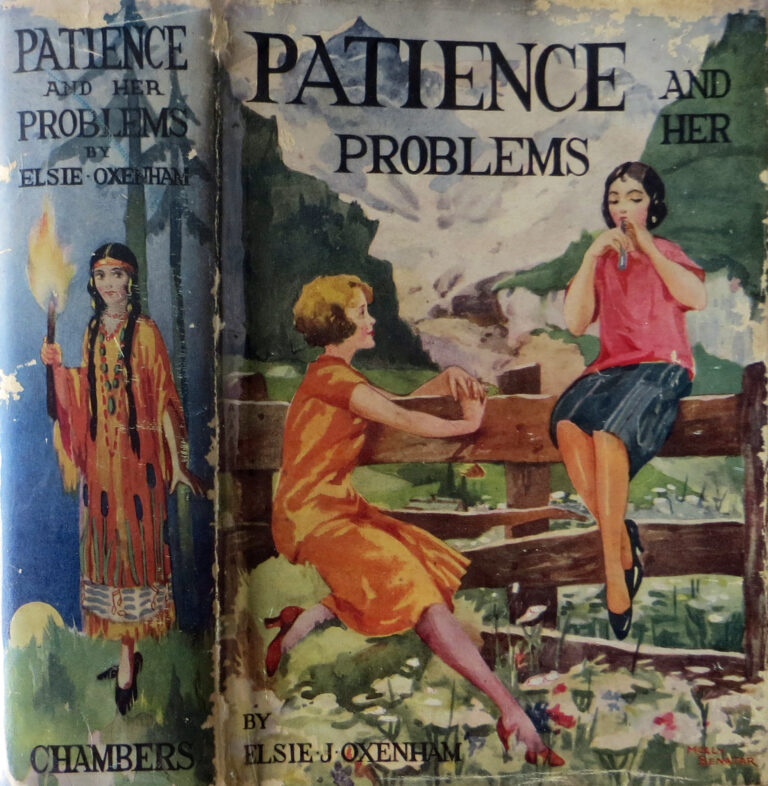
The apparent contradiction of military equipment being used in the service of the gospel of peace is not the only paradox in this passage. At the end of the passage the reader is reminded of Paul, an ambassador in chains, asking from the Ephesians prayers to enable him to preach the gospel. The idea of someone in prison being able to convert anybody is ludicrous. The oxymoron of an ambassador, someone with diplomatic immunity, being in chains, is equally bizarre. These contradictions and paradoxes point us back to that great paradox; the victory won by God over all the powers through the naked defencelessness of the crucified Christ; the glory of God seen on the cross. In the light of that one immense paradox, the possibility of an ambassador in chains; people arming themselves to proclaim the gospel of peace; and military metaphors containing words of faith seem much less bizarre.
The author of this letter knows that Christians will at times face attacks to our spiritual integrity from hidden forces. Here at the end of his letter he gives the Ephesians, and us, the advice to arm ourselves with truth, righteousness, faith, salvation, the word of God, and the gospel of peace. And to pray. Pray in the Spirit at all times. Pray for all the saints. Pray that the gospel may be boldly proclaimed. It is in its resistance to the forces of evil, its working for peace, its prayer for the community, that the church lives out its calling as the body of Christ. So, put on your military equipment, the belt of truth, the breastplate of righteousness, the shoes of the gospel of peace, the shield of faith, the helmet of salvation, and the sword of the Spirit, which is the word of God. In the words of Patience from my antiquarian children’s book, let us fight all our lives to put down bad things and establish good ones remembering always, as we will sing at the end of this service, that God is our armour, our sword, our dignity, and our delight. Amen.

 Rev Doc Geek