Reflection for North Balwyn Uniting Church
5th of November 2023
Joshua 3:7-17
Matthew 23:1-12
Members of this congregation have occasionally asked me why I always preach on a Bible reading from the Revised Common Lectionary. One answer is that by following the ecumenical lectionary we hear the same readings each Sunday as many Anglican, Baptist, Church of Christ, Lutheran, Methodist, Presbyterian, and Reformed churches around the world, and I appreciate that connection with our Christian siblings. It is also a discipline for me to preach on passages with which I struggle or disagree. If I chose the Bible passages on which I preached all you would ever hear would be those that say, ‘God is love, so love one another,’ and while I do think that that is the core of Christianity, it is not all the Bible says. This week, though, is the closest I have ever come to turning my back on the lectionary and choosing some ‘God is love’ readings instead. I do not just disagree with today’s reading from the Hebrew Scriptures. I think that readings like this one from the Book of Joshua are currently contributing to the murder of innocents.
Last month the constant conflict between Israel and Palestine flared again into active war. What Hamas did, murdering 1400 Israelis and taking hundreds of them hostage, is utterly appalling. There is no question; it is terrorism. But contrary to what many politicians and the media seem to want us to believe, the latest conflict between Israel and the Palestinians did not begin on October seventh. This congregation knows, because Nell’s other job is working for a Palestinian organisation, that the conflict between Israel and Palestine has been ongoing for 75 years.
When I visited Israel and Palestine several years ago I heard from a lot of people, including members of the Council of Religious Institutions of the Holy Land and members of the Interreligious Coordinating Council in Israel, about the two overarching stories that exist in Israel and Palestine. For the people of Israel, and for many Jews around the world, the story is one of liberation. A people who had spent centuries in exile, persecuted in almost every country in which they lived, the victims of an appalling attempt at genocide in the Holocaust, established the State of Israel with the Declaration of Independence in 1948. The Jewish Diaspora once again had a homeland. Through the Law of Return of 1950 Jews from around the world have the right to citizenship in Israel, which provides them with a place of ultimate safety whenever antisemitism is on the rise. (I do find it fascinating that by an amendment to the Law of Return in 1970 I would be able to immigrate, too, because I have one Jewish grandparent.) This first story is the one that the governments of countries like Australia, the UK, and the USA hold and promote as a cause for celebration.
But there is another story. For Palestinians what happened in 1948 was the Nakba, the catastrophe. In 1948 750,000 Palestinians were driven out of their land, including 50,000 Christians. When I visited the Aida Refugee Camp in Bethlehem I saw the world’s largest key over its gate, a symbol of the keys to the houses from which they fled that many Palestinian refugees still carry with them today. I saw the paintings on the camp walls of the villages from which the refugees had come, and the list of villages that had been destroyed in 1948. There are three or four generations of people living in refugee camps like Aida; Palestinian refugees are the oldest unsettled group of refugees in the world. Groups like the Pontifical Mission for Palestine were established in 1949 as a temporary measure to help Palestinian refugees. They are still in existence because they are still needed. This is the story that most Arab countries remember, and it is to be mourned.
As we have seen during this most recent violence, Australia recognises only the first story and not the second. This may be because, despite placing quotas on Jewish immigration after World War Two, this country came to have the second-largest number of Holocaust survivors per capita after Israel itself. In this latest conflict, we did not vote against the UN resolution calling for an immediate ceasefire, but we were one of the forty-five countries that abstained from voting. Our representative at the UN said this was because the motion did not specifically mention Hamas, although it did call for the ‘immediate and unconditional release’ of all civilians being illegally held captive, demanding their safety, well-being, and humane treatment in compliance with international law.
What Hamas did was terrorism, and must be condemned. But that does not mean we must stay silent as Israel commits war crimes. Some of the families of the hostages held by Hamas have begged the Israeli government to negotiate for their release, and Hamas has said it will release them in exchange for the thousands of Palestinians currently in Israeli jails, which includes more than 1,200 people placed under ‘administrative detention,’ held without charge or trial. But Israel is refusing to negotiate. Instead, in response to the murder of 1400 Israelis, Israel has so far killed more than 9000 Gazans, including more than 3,800 children. Breaking international law, Israel has bombed schools, refugee camps and ambulances, always with the excuse that the deaths of civilians were simply a by-product of attacks on Hamas operatives. If we care about the lives of all civilians, then condemning the Hamas terror attack must not mean allowing Israel to break international humanitarian law.

Given all that, you can understand how nauseated I felt when I saw today’s reading from the Book of Joshua: ‘By this you shall know that among you is the living God who without fail will drive out from before you the Canaanites, Hittites, Hivites, Perizzites, Girgashites, Amorites, and Jebusites’. We are reading the account of the very first genocide carried out in Israel, and we are meant to be on the side of those doing it. One of the commentators I read this week said that when we read it, ‘It is well to remember this story reflects what has been the norm in history for centuries and it is only in recent times that we are realising that the invasion of land and killing of its inhabitants is no longer acceptable’. But what we are reading is not simply a matter of history. Israeli Prime Minister Benjamin Netanyahu said of this most recent conflict, ‘“You must remember what Amalek has done to you,” says our Holy Bible — and we do remember, and we are fighting.’ Netanyahu was referring to a passage in Deuteronomy: ‘When the Lord your God has given you rest from all your enemies on every hand, in the land that the Lord your God is giving you as an inheritance to possess, you shall blot out the remembrance of Amalek from under heaven; do not forget’. (Deuteronomy 25:17-19) A government that believes that God wants them to ‘blot out the remembrance’ of their enemy from under heaven is not going to follow the rules laid down in the Geneva Conventions.
Palestinian Christians told us in the 2009 Kairos Palestine document how dangerous the Bible can be. There they asked the churches of the world to rethink the ‘fundamentalist theological positions’ used to justify Israel’s Occupation. They called on their Christian siblings to ‘preserve the word of God as good news for all rather than to turn it into a weapon with which to slay the oppressed’. Given this, if we do read the Book of Joshua we need to be very clear that God did not eliminate the Canaanites from Canaan.[1] We must remember that the Book of Joshua was probably written after the Exile to explain that it had happened not because God had turned from Israel, but as a result of the Israelites breaking the covenant they had made with God even after Joshua had warned them, ‘If you forsake the Lord and serve foreign gods, then he will turn and do you harm, and consume you, after having done you good.’ (Joshua 24:20) The Book of Joshua does not provide an example of how a twenty-first-century nation should relate to its neighbours.
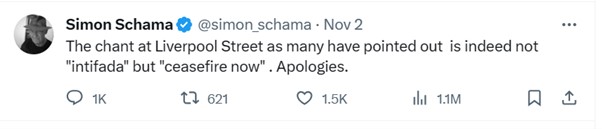
The gospel reading today is also a dangerous passage. Brendan Byrne says of this section of the Gospel according to Matthew, ‘No text in the New Testament has contributed more to the creation in Christian and wider imagination of the stereotype of “the Pharisee” as a byword for hypocrisy, a caricature that inevitably redounds upon Judaism as such’.[2] One of the things that the most recent violence in Israel and Palestine has shown us is how much the fear of antisemitism motivates some Jews. There are, of course, many Jewish people who oppose what Israel is doing in Gaza, groups like ‘If Not Now’ and ‘Jewish Voice for Peace’. But I was disturbed to see the reaction of respected historian Simon Schama to a sit-in recently held in the Liverpool Street train station in the UK. Despite the clear banners proclaiming that those leading it were ‘Jews against Genocide’ Mr Schama heard the protesters’ chants of ‘ceasefire now’ as chants of ‘intifada,’ a mishearing for which he later apologised. This is what centuries of Christian antisemitism, culminating in the Holocaust, have done. It has left a legacy of such fear that a British historian can hear calls for a ceasefire as antisemitic threats. Given the way in which the argument that the author of the Gospel of Matthew is having with his fellow Jews was subsequently misused by the church to attack all Jews, Christianity needs to take responsibility for that fear.
The Bible is dangerous. It contains the most wonderful passages of universal love, and it contains instructions for genocide. We always have a choice about which parts of the Bible we pay attention to. Today the lectionary may want us to hear Israel’s entry into Canaan as a gift from God to the people of God, and ‘the scribes and the Pharisees’ as stock characters used to give point to Jesus’ condemnation of hierarchy and hypocrisy. But today such readings are unsafe, and I will not preach on them. As the Kairos Palestine document says, ‘The word of God is a word of love for all His creation. God is not the ally of one against the other, nor the opponent of one in the face of the other. God is the Lord of all and loves all, demanding justice from all and issuing to all of us the same commandments.’
Let us in our reading and reflection focus on the parts of the Bible that speak of God’s love for the entire creation, and then let us try our best to imitate that universal love, that mourns all untimely or violent deaths, as we worship the God who is love. Amen.
[1] Which even the book itself makes clear in Joshua 16:10 and 17:12-23.
[2] Brendan Byrne, Lifting the Burden: Reading Matthew’s Gospel in the Church Today (2004), p. 169.

 Rev Doc Geek
Pingback: Sermon: It’s not the Rapture | Rev Doc Geek
Is Mr Netanyahu Satan? Matthew ch5.9 ‘Blessed are the Peacemakers for they shall be known as the children of God’